The Sleepe Fan Business
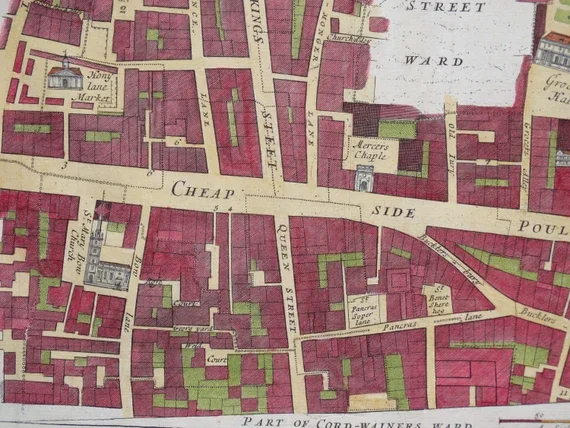
The Sleepe family on Fanny’s maternal side were the owners of a prosperous fan making business, a long lineage of makers who opened numerous shops along the luxury shopping street of Cheapside, London.
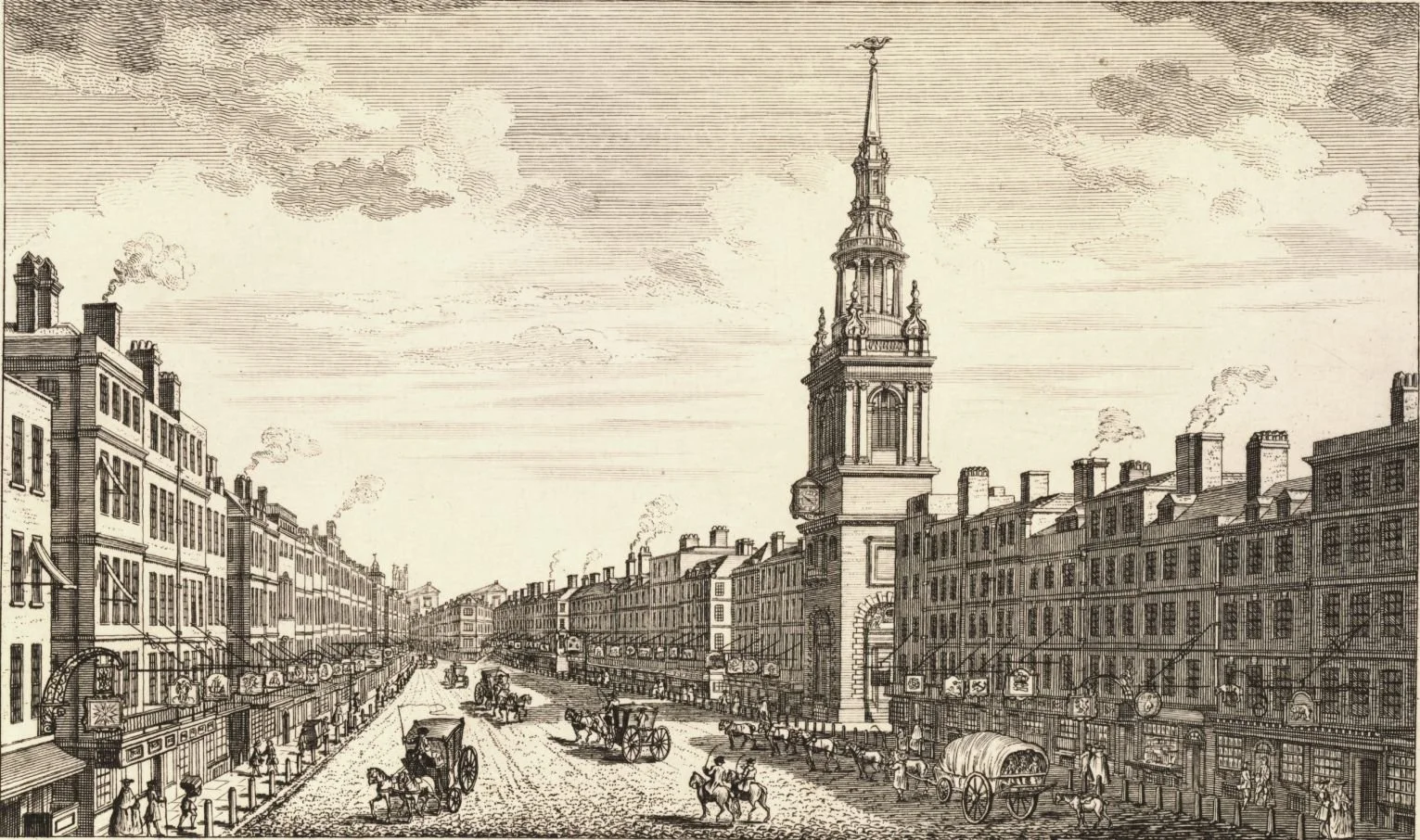
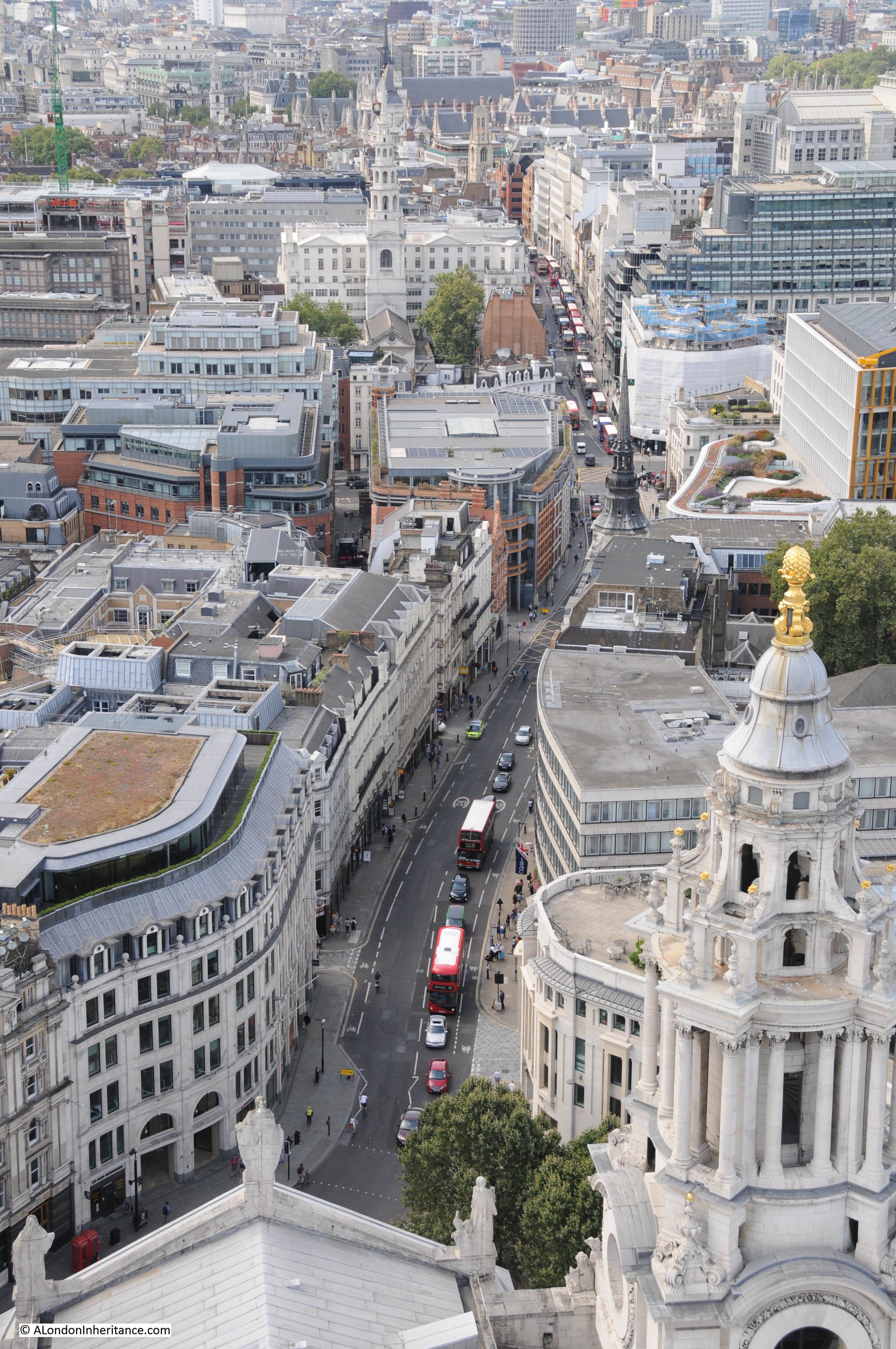
A view of the church of St Mary le Bow in Cheapside, 1752, the street where the Sleepe family’s fan shop was established. © The Trustees of the British Museum
It is a shame that Fanny and her father, Charles, never referred to the family business of his wife, Esther. They considered music and literature more socially acceptable than trade in fans. Or maybe, Charles was ashamed that it was his wife who supported the family from her business.
There was no need to be ashamed of the fan industry particularly at the time the Sleepes were involved as fans were fashionable objects for women and men to hold, or flutter. Not only were they decorative in themselves and useful for protection in the heat and against insects, but they signified social standing and developed a language of seduction. Over time the design and artistry of the decoration became a highly regarded art and thus trade in fans was superior to other trades like millinery.
A History of Fan Making
In her book “A book about Fans” published in 1895, M. A. Flory opens the chapter on the history of fans with:
“The history of the fan is full of human sentiment: this trifling object reveals the customs, the dainty tastes, the artistic appreciation of our ancestors; and it is particularly interesting as an evidence of the patience and scrupulous care with which artisans of past generations perfected their work…”
In the Spectator on 27 June 1711, Joseph Addison proposed an Academy to train young women in the art of using the fan:
“Women are armed with Fans as Men with Swords, and sometimes do more Execution with them. To the end therefore that Ladies may be entire Mistresses of the Weapon which they bear, I have erected an Academy for the training up of young Women in the Exercise of the Fan, according to the most fashionable Airs and Motions that are now practis’d at Court. The Ladies who carry Fans under me are drawn up twice a-day in my great hall, where they are instructed in the Use of their Arms, and exercised by the following Words of Command,
Handle your Fans,
Unfurl your Fans,
Discharge your Fans,
Ground your Fans,
Recover your Fans,
Flutter your Fans.”
The earliest record of the fan in England dates from 1307. They were used by royal ladies and even by men. The trade grew slowly at first. Queen Elizabeth I favoured the custom that a fan should be the only present which a sovereign should receive from her subjects. By the end of her reign in 1603 fans were established as a fashion accessory for the very rich at the courts of Europe, and locally made fans had started to be supplemented with imported fans from the East. The East India Company, formed in 1600, accelerated this dramatically and its minutes as early as 1614 indicated that fans were being exported to Europe to fuel crazes for the exotic and unusual. By the late 1600s and early 1700s local craft and workshops developed and to protect their trade, a Guild of Fann Makers was formed in 1670 following a petition to Parliament concerning the threat of imported fans.
After the revocation of the Edict of Nantes in 1685, French Protestants, Huguenots could either convert to Catholicism, face life imprisonment or flee the country. 200,000 left. There was a massive influx to England, Holland and Prussia and these included the Protestant members of the French fan makers’ Association de Eventaillistes who brought the skills that had made France the most famous centre for fan making. The fan makers set up businesses in London in the Cheapside and Poultry district.
The local trade grew but there continued a running battle against cheap fans printed in Canton, China and imported by the East India Company.
In 1699 a protective duty of forty shillings per dozen on imported fans in England was imposed and if they were painted their importation was forbidden. This was part of broader economic policies designed to protect emerging English manufactures from foreign competition, especially luxury goods like fans.
Under Queen Anne, London manufacturers obtained a charter of incorporation and in 1709 Worshipful Company of Fan Makers was established. It tried to grow the English fan trade, but their success was small in comparison to the French industry. The printed fan, developed in the early 18th century, further disrupted the market as they were much cheaper to make, and fans suddenly became accessible to a much wider market threatening the skilled painters and handworkers who formed the Guild’s core membership.
In 1710 a petition “The Fann-makers’ grievance, by the importation of Fanns from the East Indies” was produced:
“That the manufactures of Fanns and Fann-sticks though it may seem slight to some, is certainly at this time of very great consequence to a very considerable branch of the trade of England, for that it employs multitudes of men, women, and children, in making the sticks, papers, leather, in ordering the silk (which paper, leather and silk is manufactur’d in this nation); likewise great numbers employ’d in painting, varnishing, and japanning; and further until there be put a stop to the importation of Indian Fanns and Fann-sticks, of which it can be proved that 550,000 have lately been brought over, great numbers of poor people, continually employed in the work must otherwise inevitably perish”
Their decoration reflected events of the time as well as mythical and historical subjects.
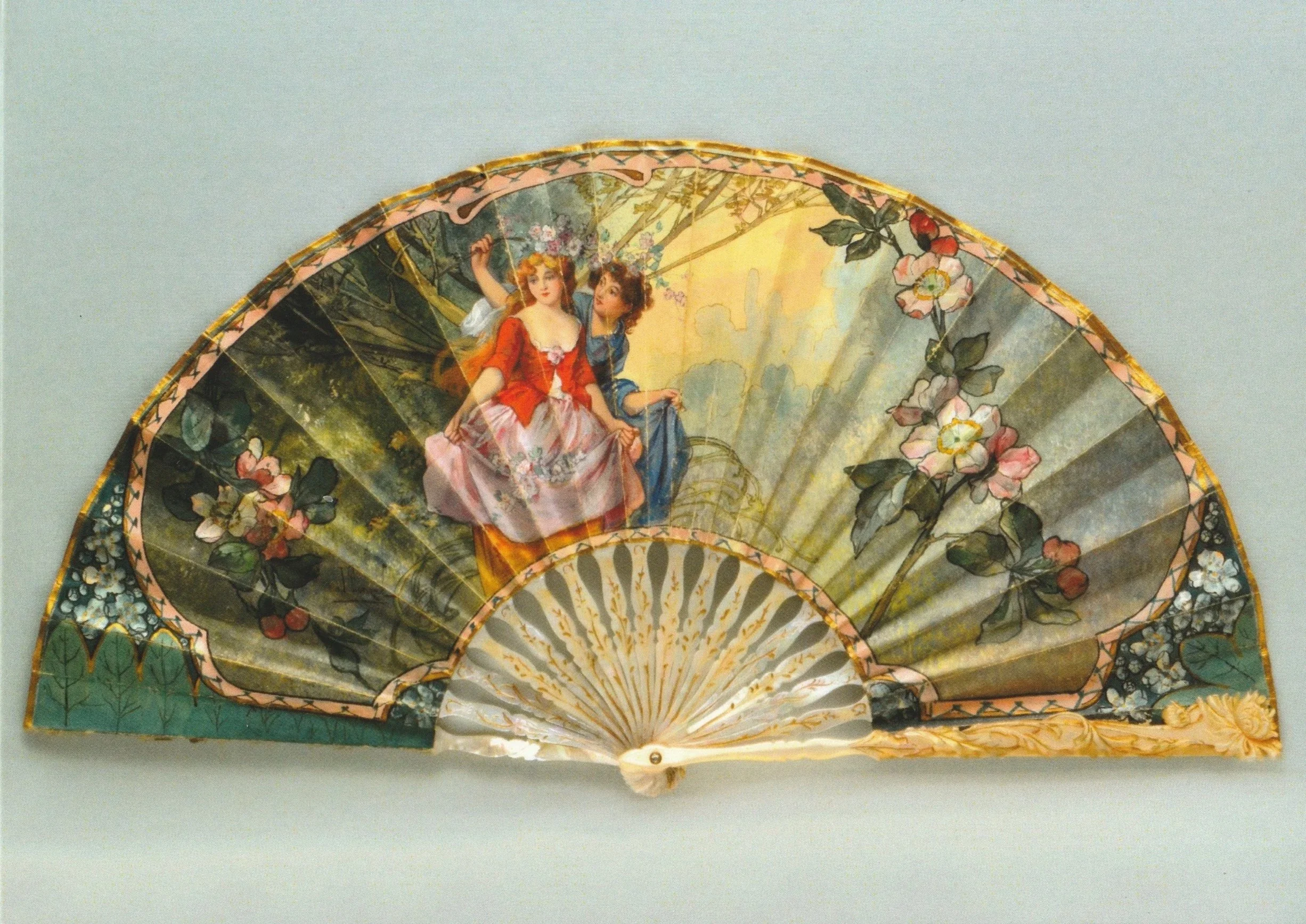
Mother of pearl fan, artist: J.Donzel, French c. 1905
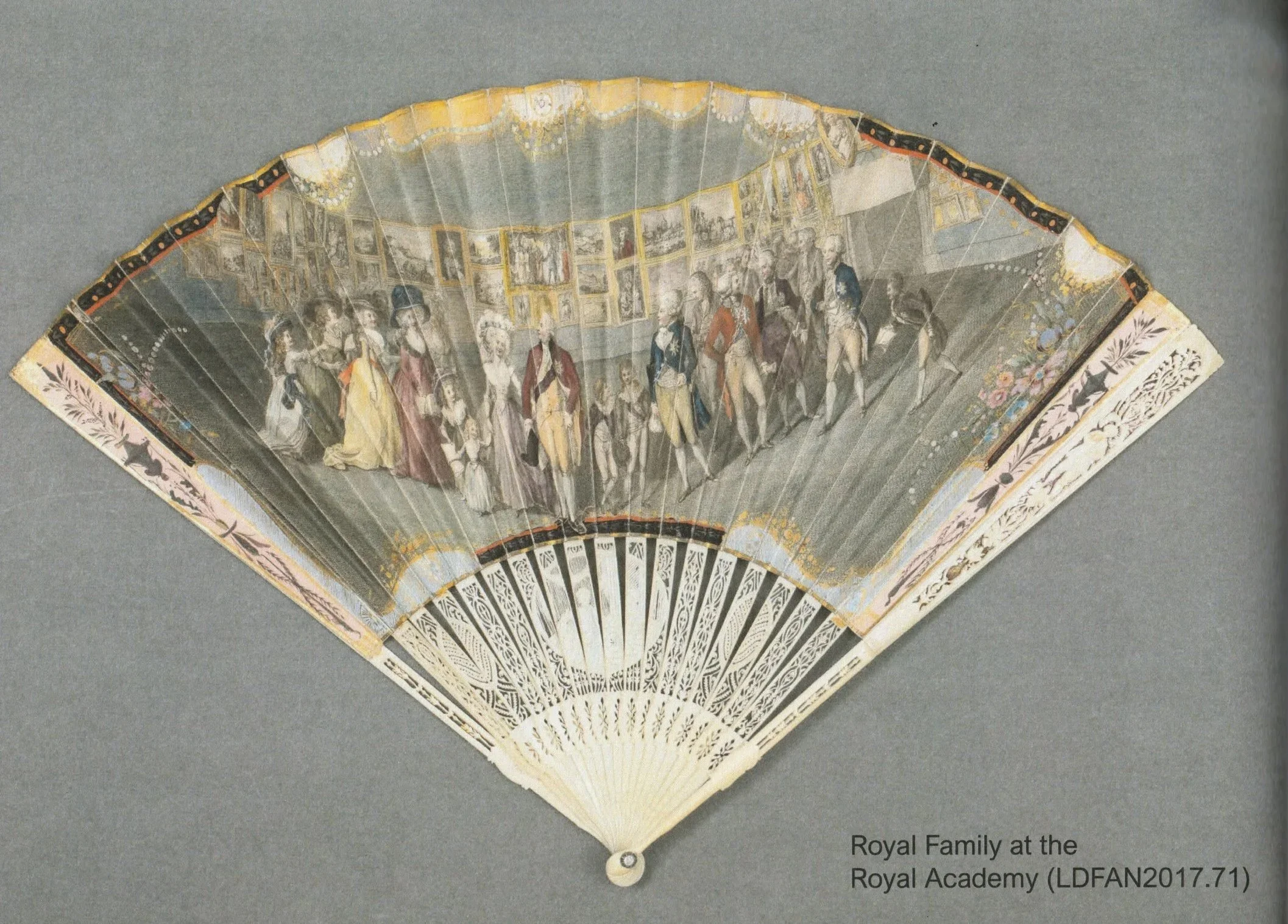
Royal Family at the Royal Academy, Ivory and paper, Antonio Poggi, England, c. 1790
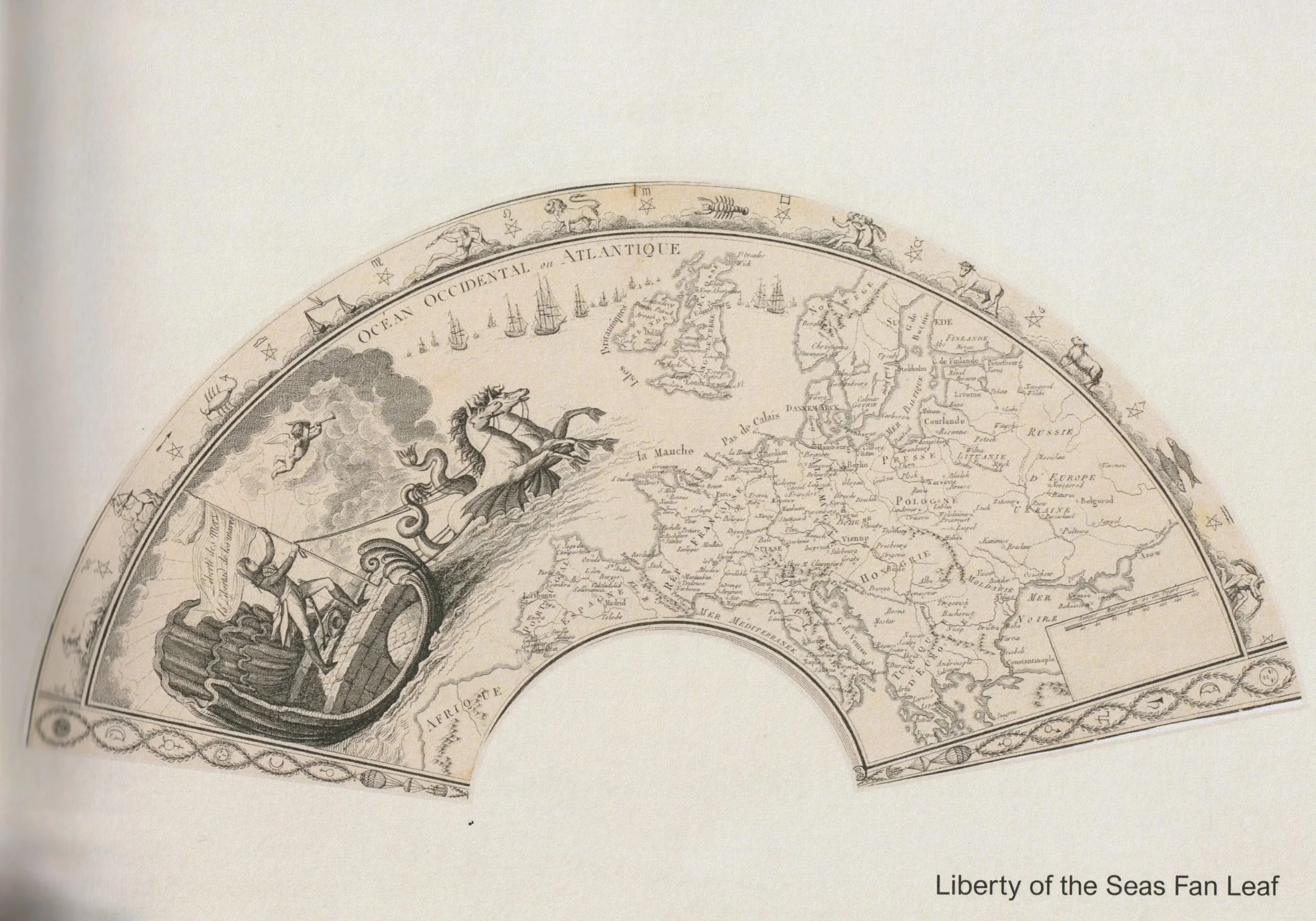
Liberty of the Seas, Paper, 18th century
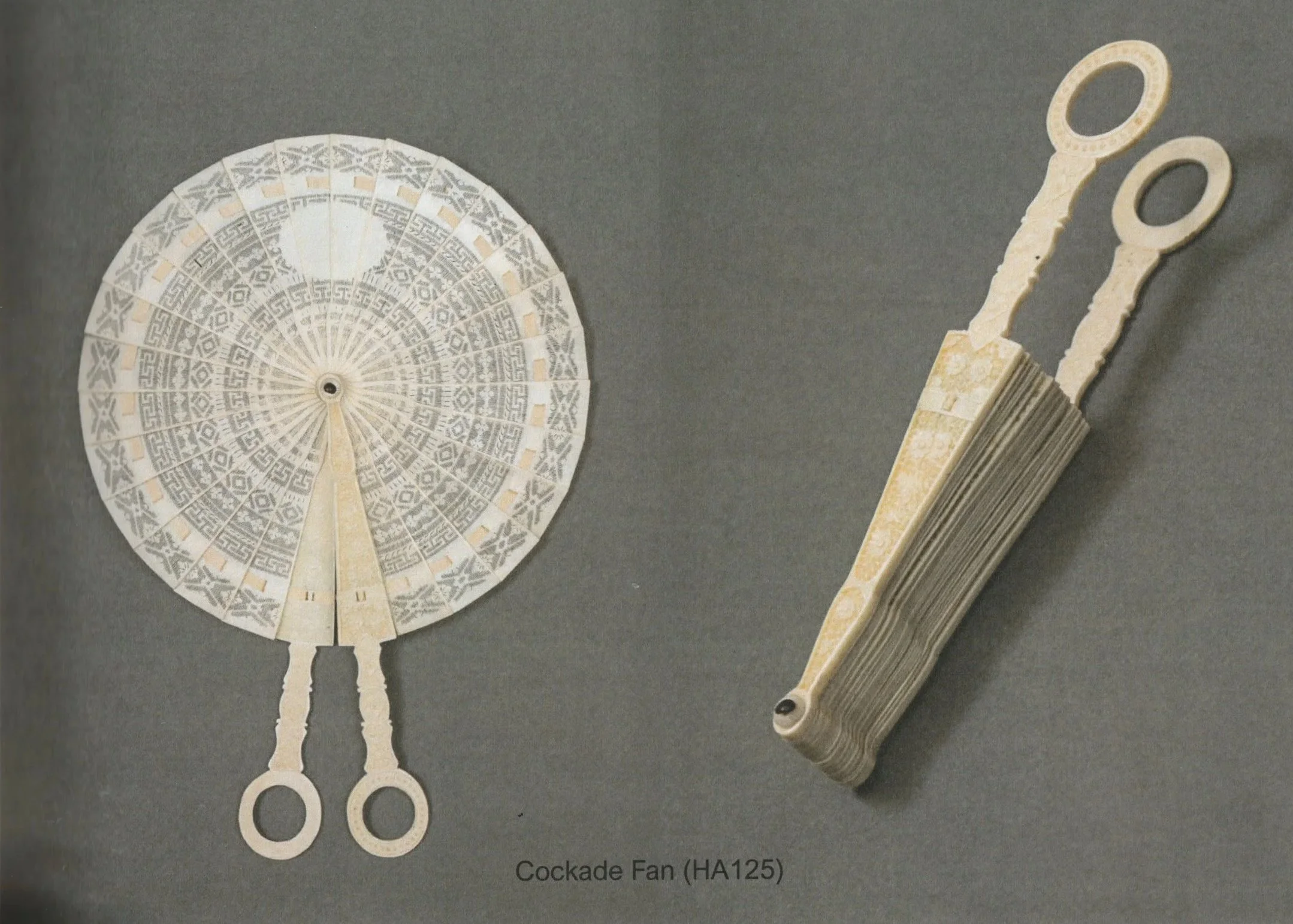
Cockade Fan, Ivory, Possibly China, c. 1812
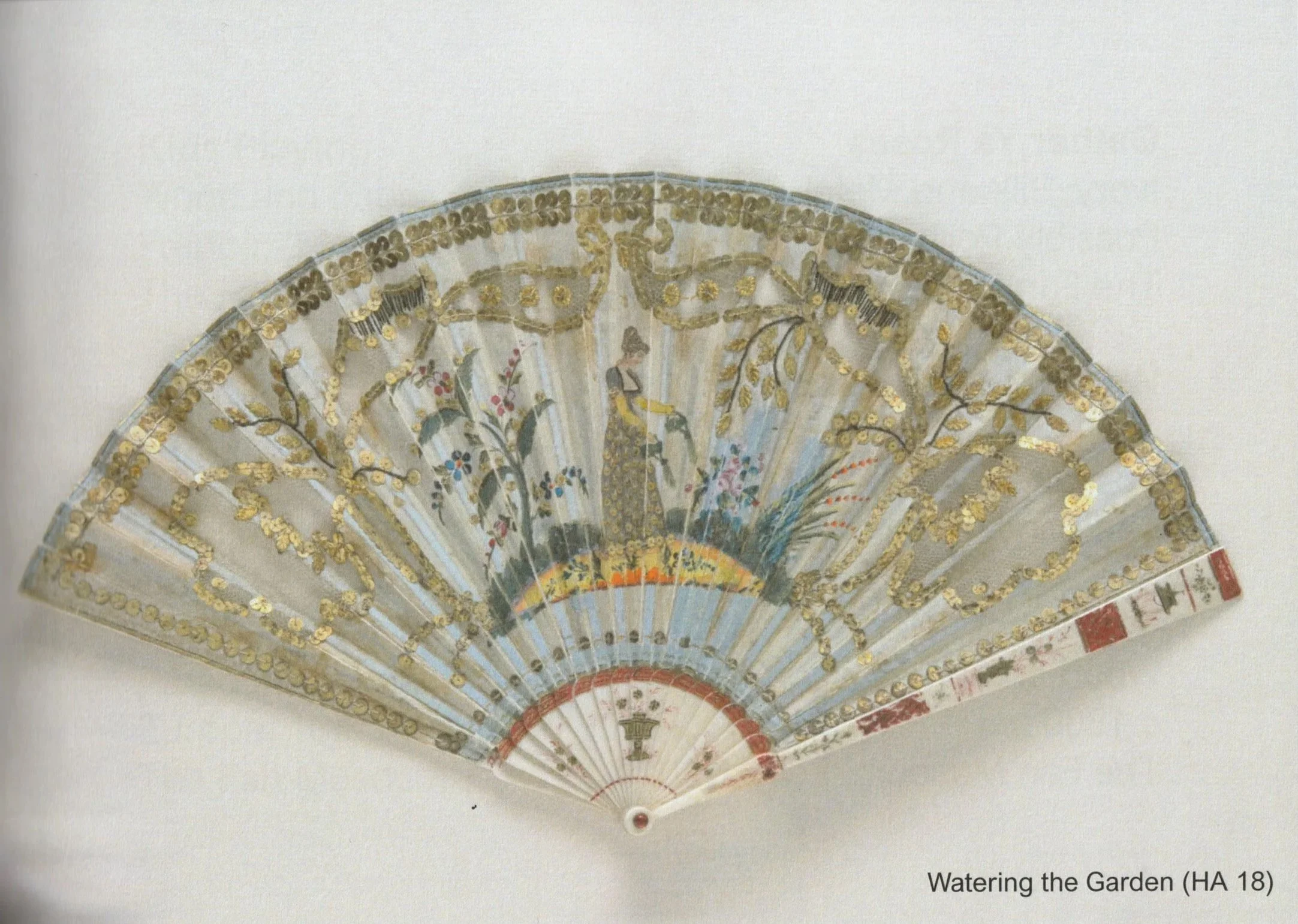
Watering the Garden, Ivory, net and metal, Possibly France, c. 1810
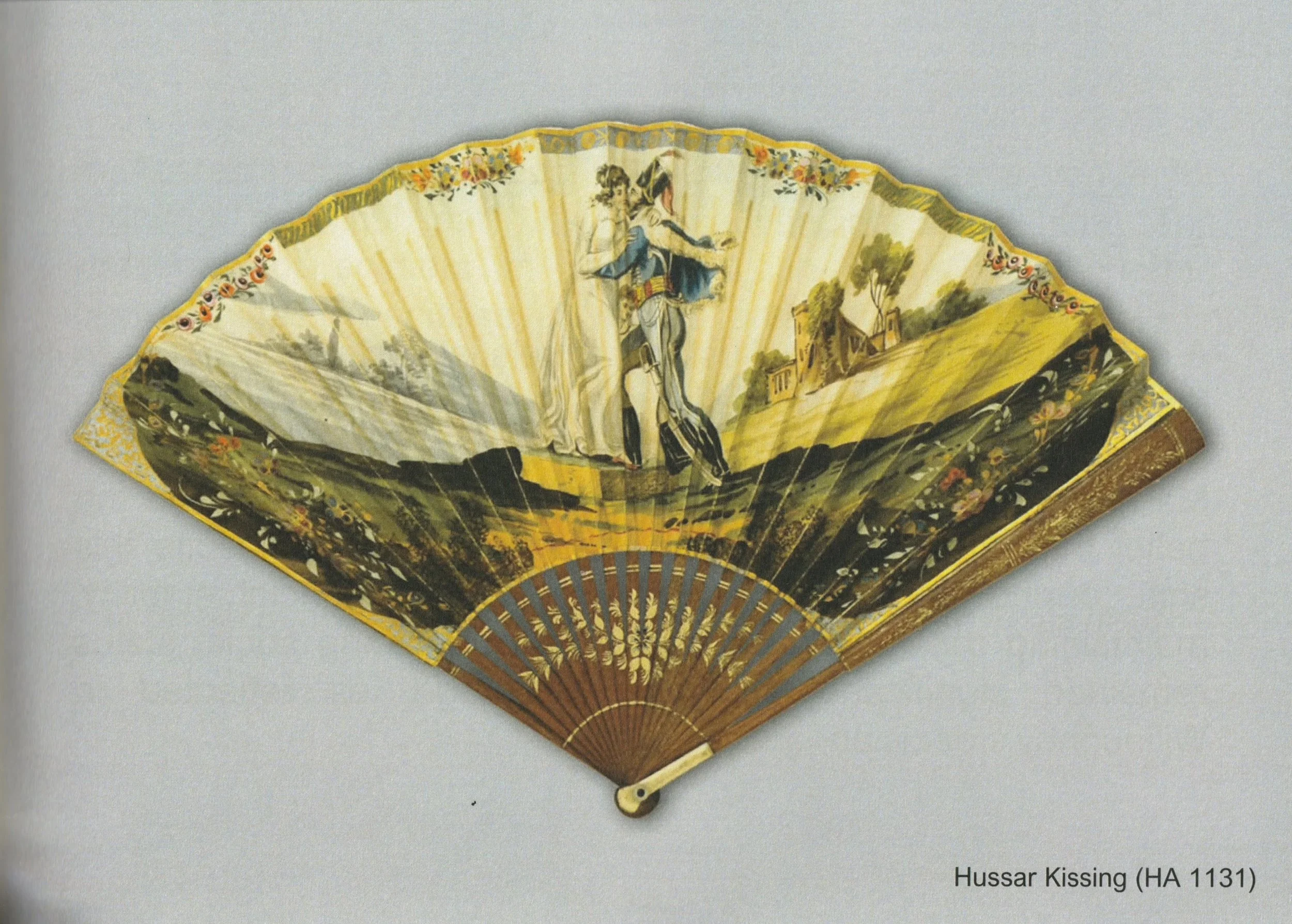
Hussar Kissing, Wood and paper, England, c.1810
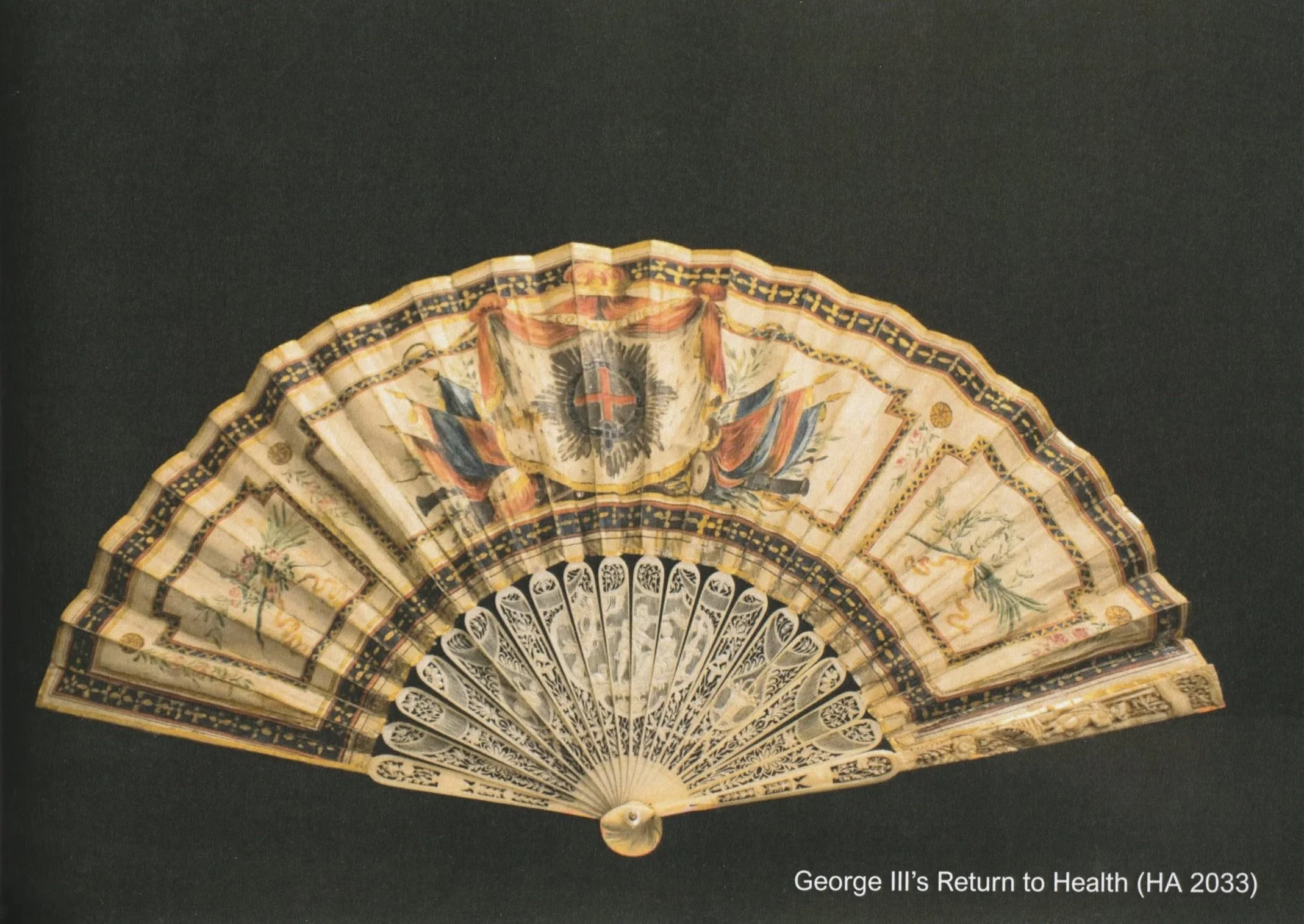
George III's Ivory and vellum, England, c.1790
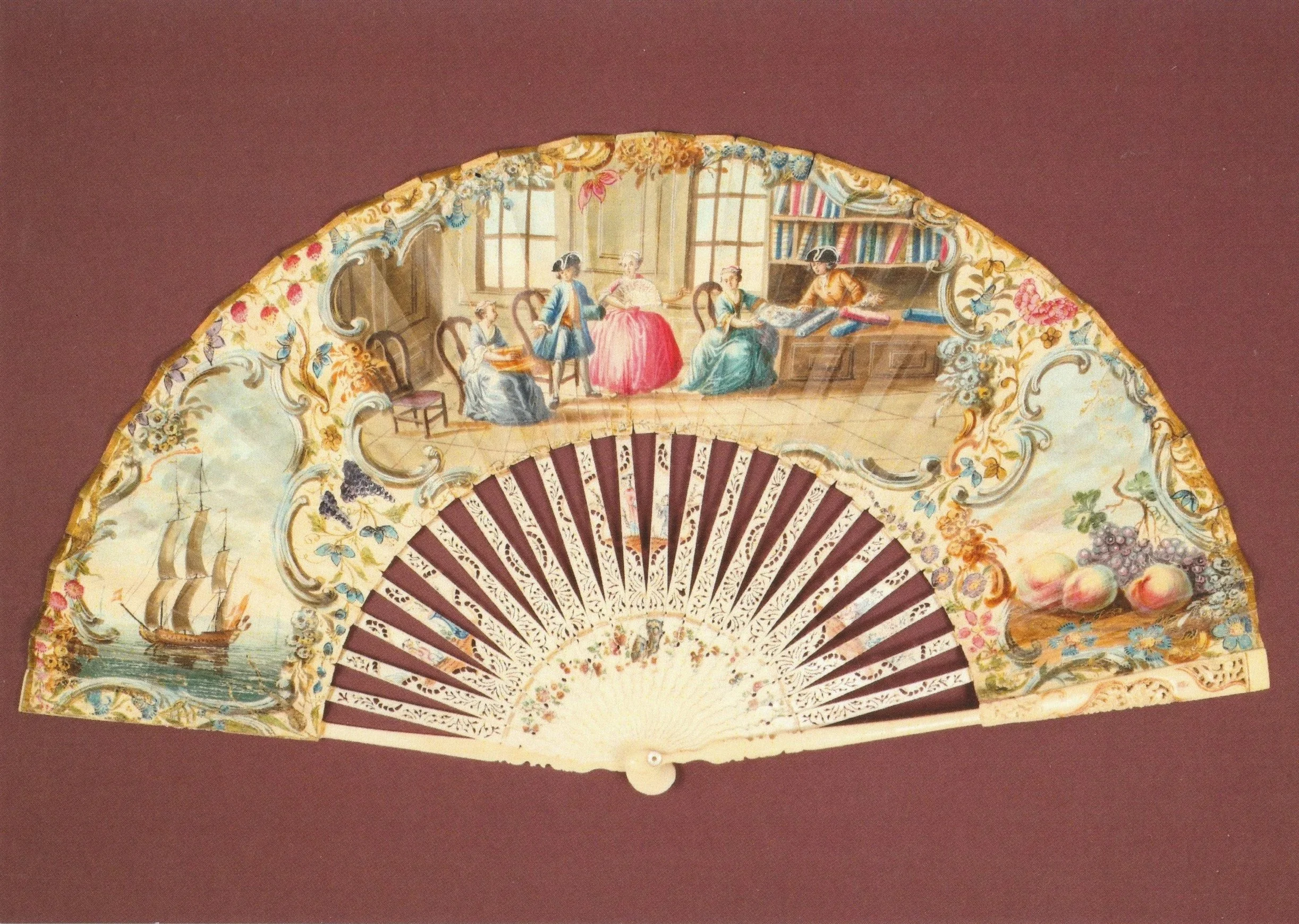
The Mercer's Shop, England, 1750s
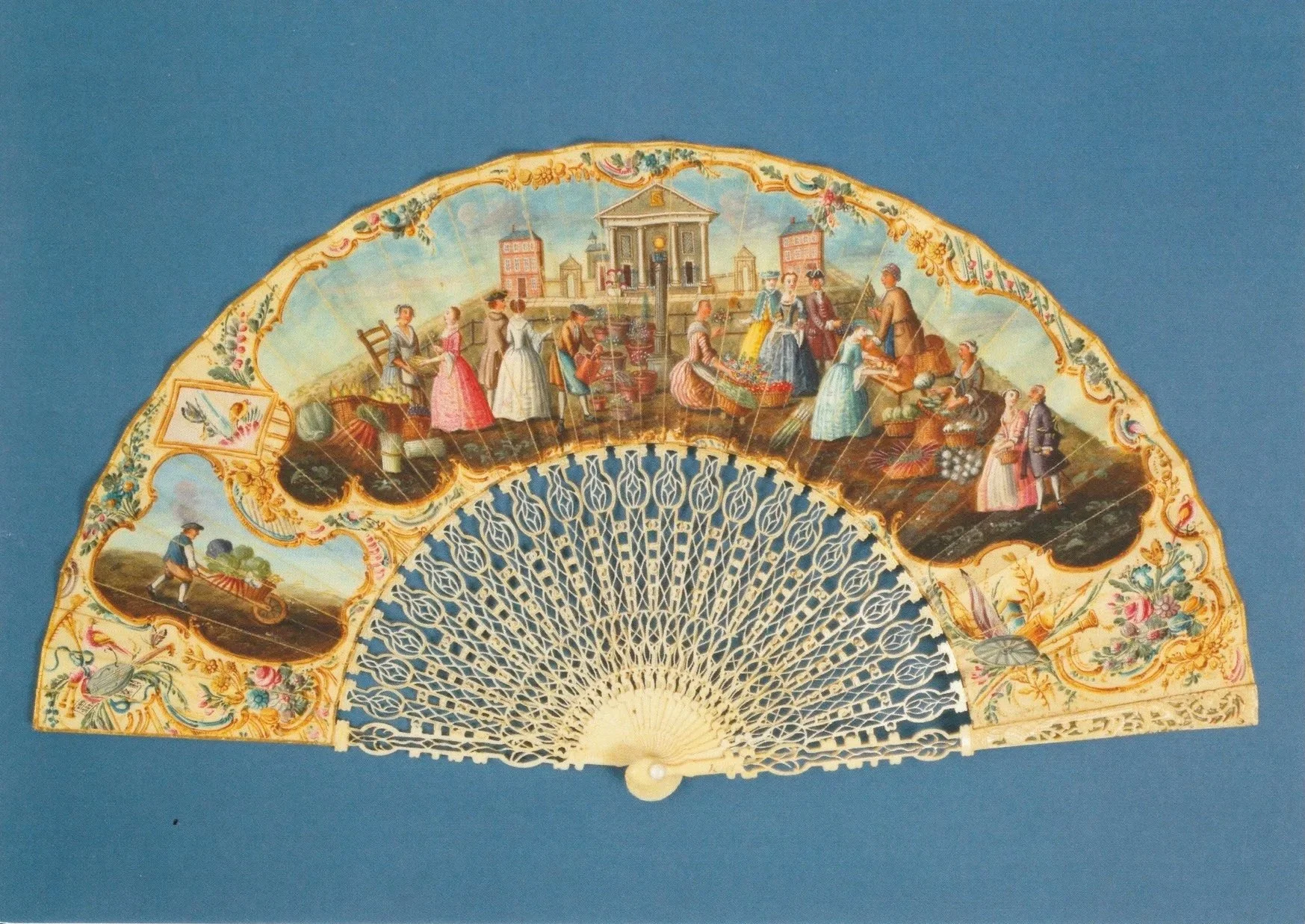
Covent Garden Market, England, c. 1750s
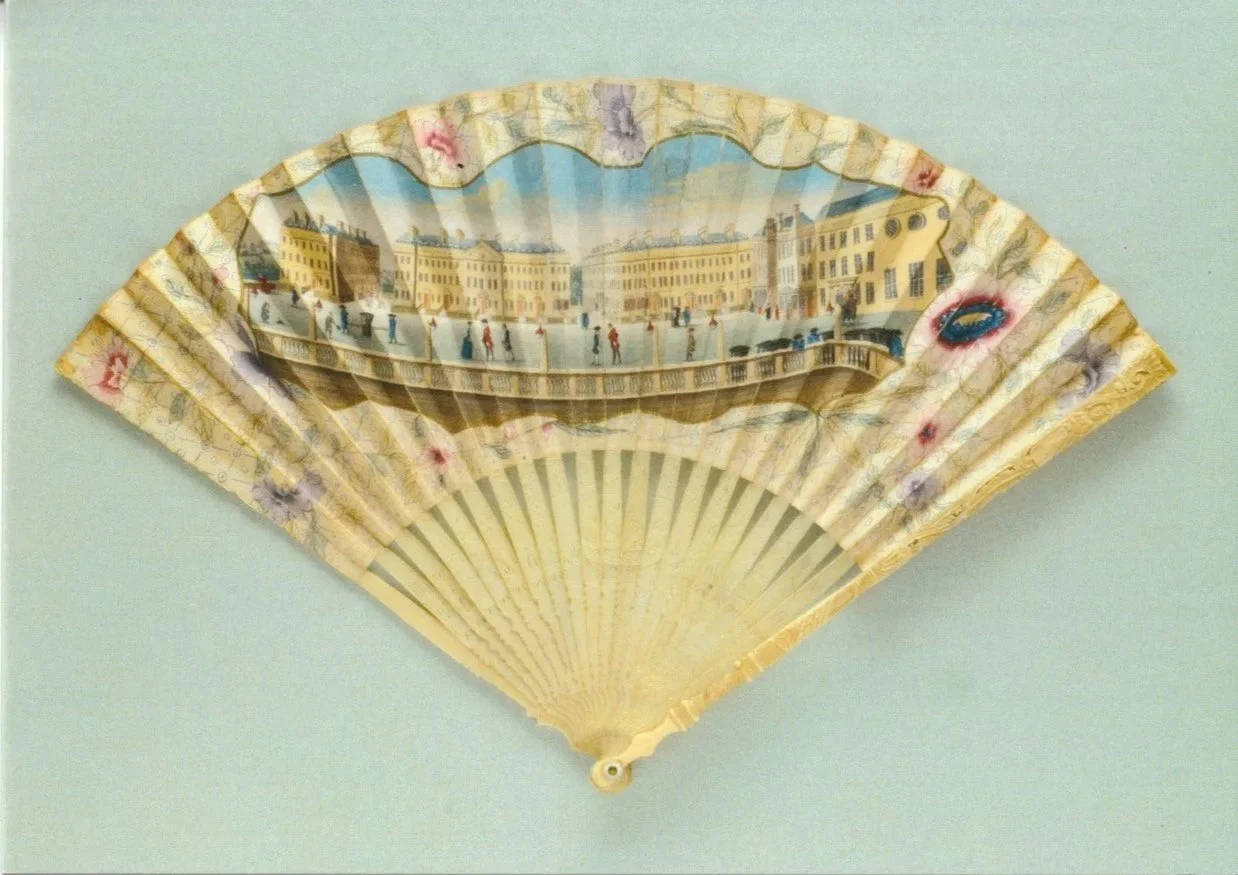
North Parade in Bath, Ivory and paper, England, C. 1749
A Curious Composition of Early Fans
“… He drew from his pocket a fan of dainty-chicken-skin, and spread it open.
… Hugh frowned upon the Duke’s fan. … ”
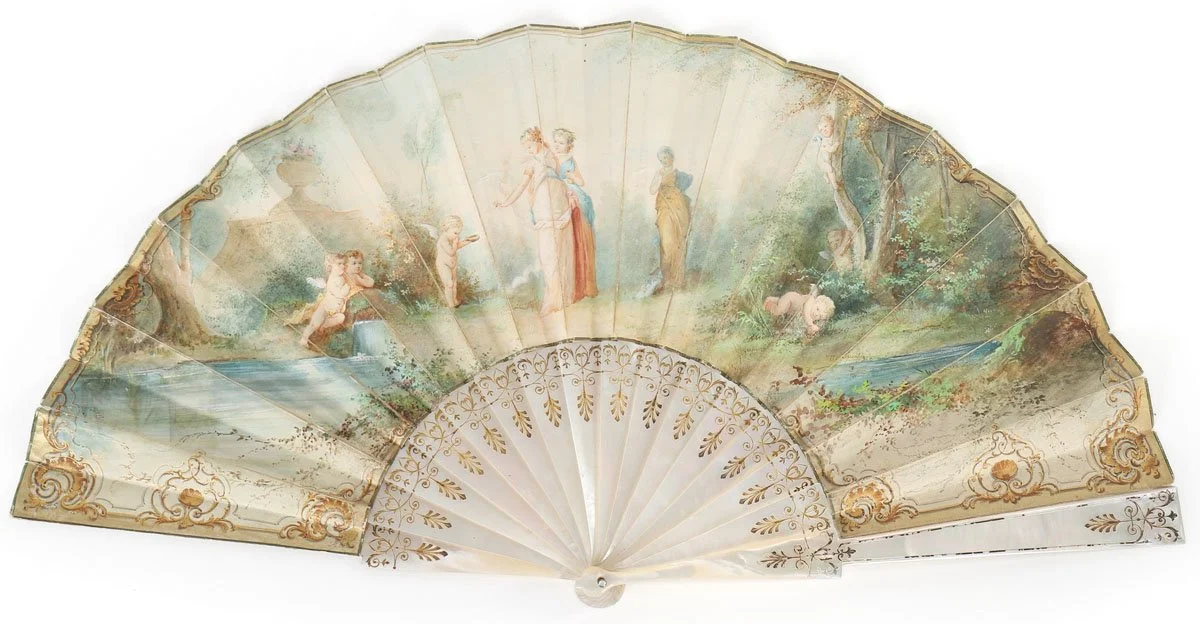
French, circa 1890, the chicken-skin leaf with Neoclassical scene of maidens and cupids
The principle parts of fans are the handle, consisting of blades or sticks, and the mount or leaf. Ivory, mother-of-pearl, tortoise shell, sandal-wood, ebony, bone and lacquered wood were mainly used for the handle. The leaf, cut in the form of a segment of a circle, is always painted before being mounted. Vellum or skin, Japanese paper, satins, silks were used at this time. The design if drawn on the material with a fine brush.
Fans made of chicken-skin are referred to in some of Georgette Heyer’s books, usually with disapproval.
Scene between Justin, Duke of Avon and Hugh Davenant
Chapter Eight
These Old Shades by Georgette Heyer
But, we learn that “chicken-skin” was not chicken. According to the article, it was even more distasteful – it was from the foetus of unborn animal offspring. A type of fine vellum made from the skins of very young animals, typically sheep, goats and cattle. According to Bertha De Vere Green, a noted scholar of fan history and design, " … the very finest was obtained by the barbarous practice of killing the mother before the birth of her offspring."
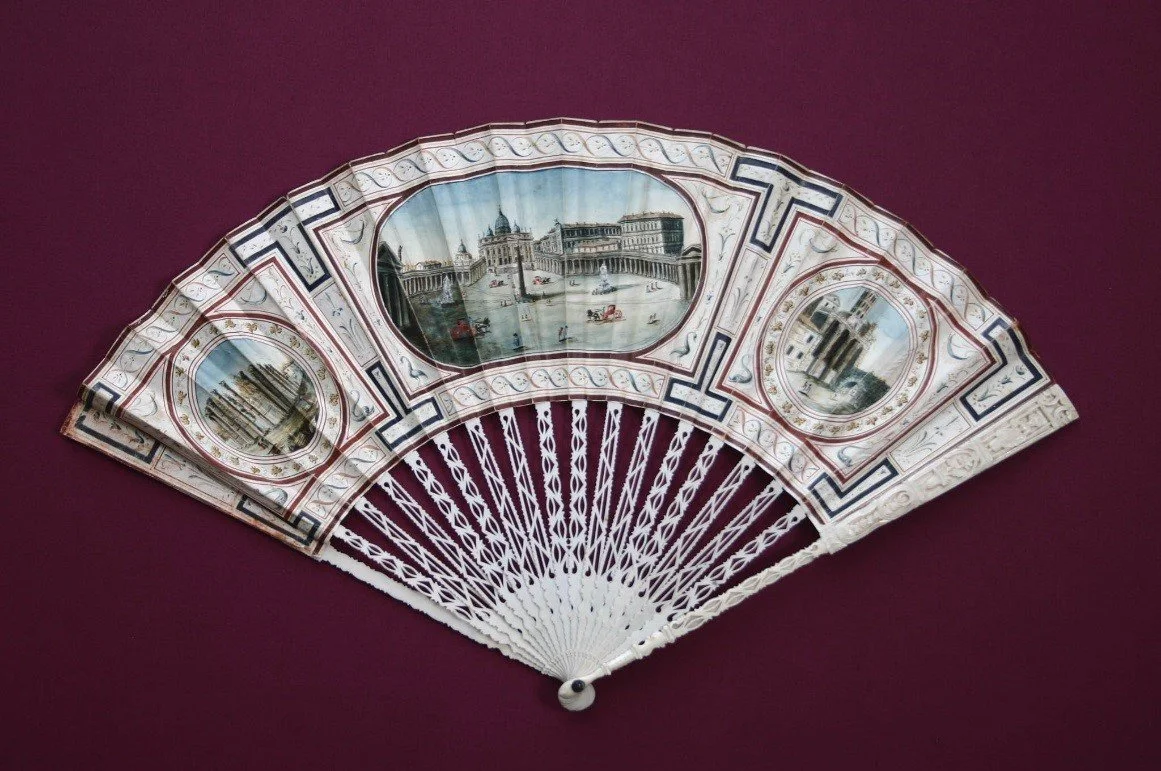
Grand Tour Fan (1790-1830) of Roman scene, unknown maker
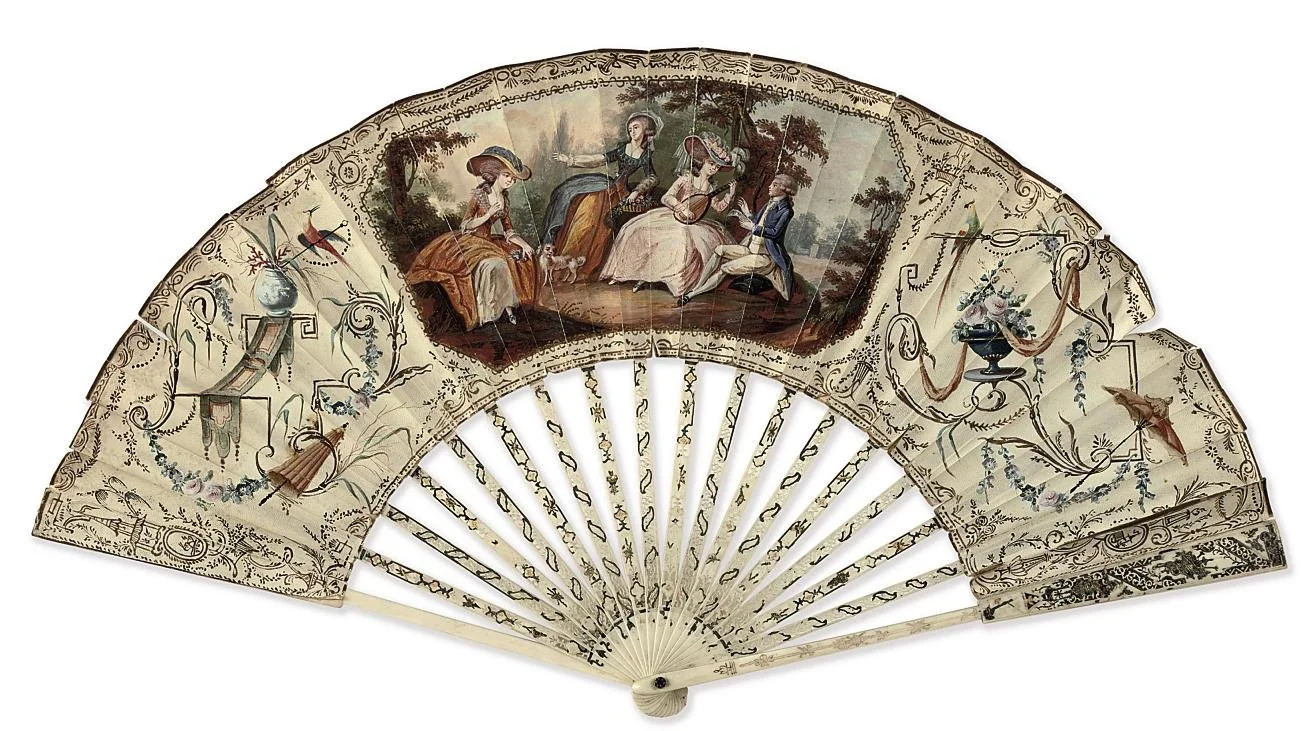
French, chicken skin fan circa. 1780, painted with a central cartouche depicting a courtier singing to his lady, the ivory stick pierced, silvered and gilt
The Sleepe Family
Amy Louise Erickson in her article “Esther Sleepe, Fan-Maker, and Her Family” sets out her researches into the Sleepe family, correcting as much as possible inaccurate information that had appeared in some of Fanny’s and her father’s memoirs.
Fanny’s mother, Esther, came from a long line of fan makers. Esther and her two sisters each had businesses, their mother had another and their grandfather was also a fan maker.
Francis Wood (circa 1665….) married to Arabella . They had two children, Mary and Frances. They are included in 1695 listing of London Inhabitants. Francis is listed in 1706 as a fan maker and in March 1709/10 he is listed as one of 17 Catholic fan makers in Blackfriars. Dr Burney suggested that Esther’s grandfather was called M. Dubois and was a Huguenot refugee but this is difficult to reconcile with the facts that are actually known; that he was a catholic called Wood in 1695.
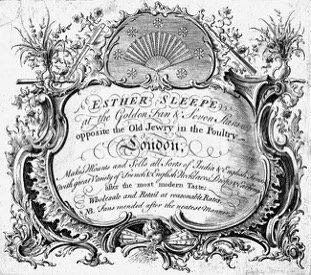
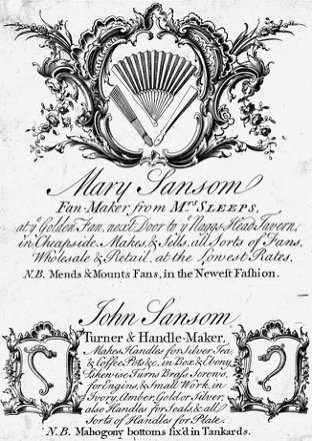
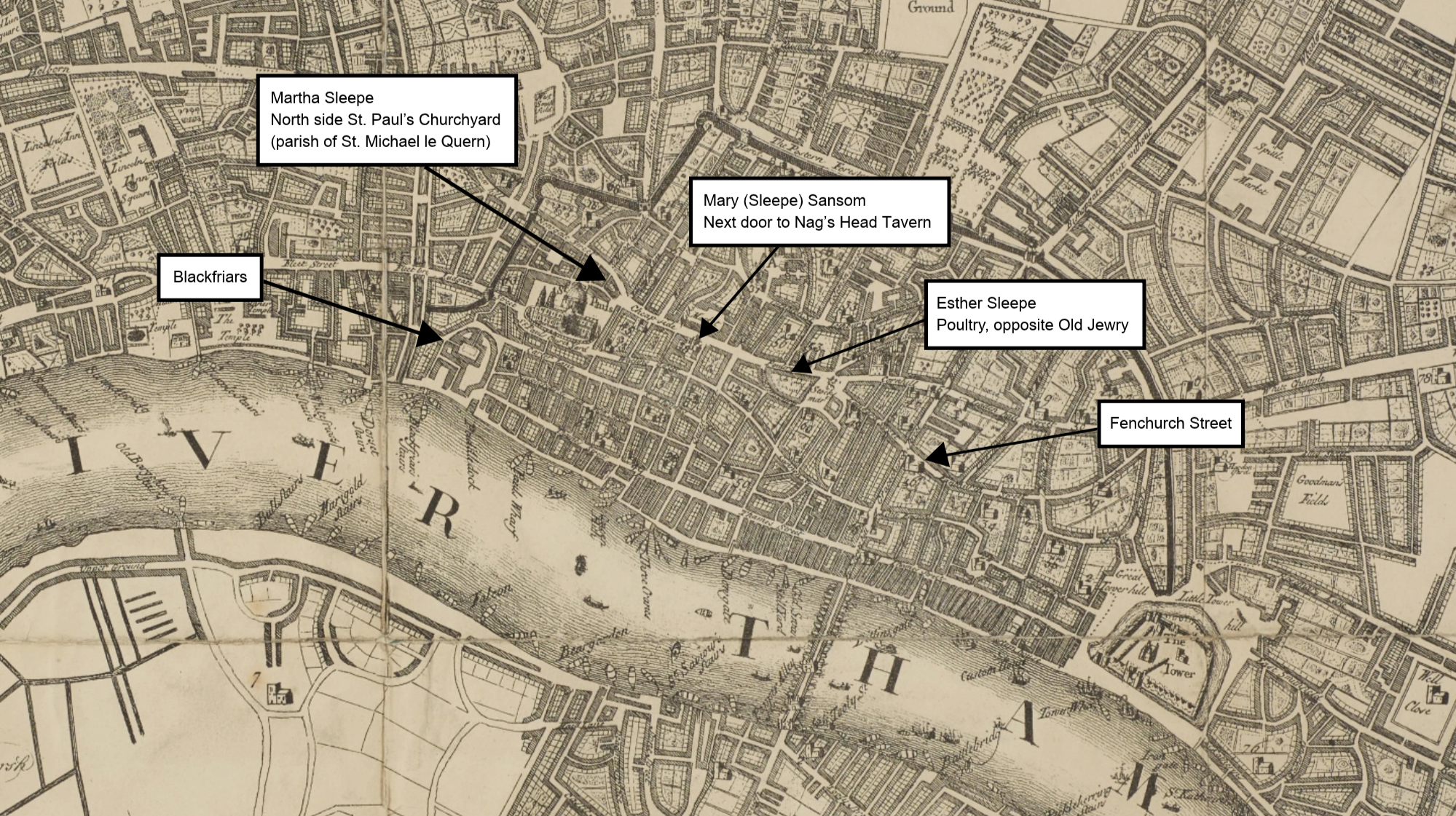
Esther Sleepe (1725-1762) In August 1747 she obtained the Freedom of the Musician’s Company by virtue of being daughter of Richard Sleepe. Subsequently, she took Freedom of the City of London in order to trade on her own account, trading as a fan-maker like her mother. Her address was the Golden Fan & Seven Stars opposite the Old Jewry in the Poultry, London. See her trade card below. She makes mounts and sells all sorts of India and English fans as well as a great variety of French and English necklaces, drops and earrings. Fans were made by female workers on the premises but she also imported fans though the East India Company and traded wholesale as well as retail, supplying provincial and possibly colonial retailers.
Frances Wood (1685-1773) Decermber 1705 married Richard Sleepe (1685-1758). Richard was a musician, head of the City Waits (mayor’s band that performed at civic functions), warden of the Musicians’ Company and one of the first subscribers to the new Society of Musicians. 15 children were born, though at least 9 died. They lived in St Ann Blackfriars, where their first six children were born until 1714, when they moved to the north of St. Paul’s, to the parish of Christ Church Greyfriars. One child was buried and another six were born in eight years.
In 1722 she took her eldest son Francis, as apprentice to learn the trade of fan-making. By 1723, the Sleepes were in the parish of St. Michael le Querne at the west end of Cheapside, and three more children were born, of whom only Esther survived.
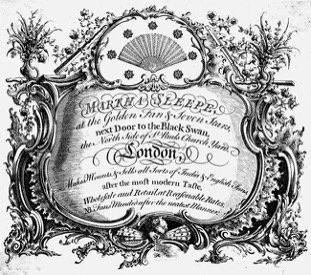
Martha Sleepe was an older sister of Esther and traded in fans in the same street at Esther. They had similar produce except that Esther sold jewellery and Martha didn’t. They both mended fans. She never married
Mary Sleepe (Sansom)
Mary was the elder sister of Martha and Esther. She married John Sansom, a turner and handle maker in 1743. She also had a fan shop but she traded under her husband’s freedom. The three sisters’ shops were in Cheapside which was the most exclusive shopping street in the City.
Whether the sisters actually made the fans they sold is not clear. Did they train in the craft or the art of decoration themselves? Probably not. They would employ journey women on the premises to produce some of the fans they sold. They would commission freelance artists to do the decoration.
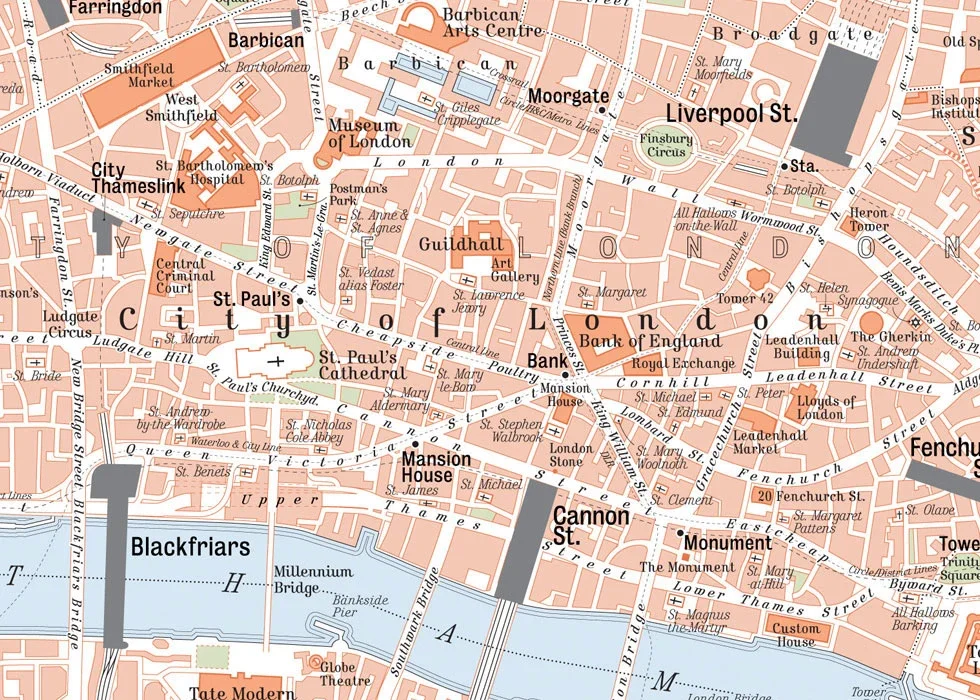
Old Maps to Modern Day
My Visit to the Fan Museum
Today I visited the Fan Museum in Greenwich, London. It is on the corner of Grooms Hill and Burney Street, which was named after Fanny’s brother, Dr. Charles Burney who ran a school there from 1793. The museum is magical. It is in two lovely Georgian houses and was founded about 35 years ago by Hélène Alexander and her husband, A.V. (Dickie) Alexander OBE. Hélène Alexander was born in Alexandria, Egypt but moved to England to study history of art. Her life-long interest in fans inspired her to become a collector and world authority. Her husband shared this passion for the history and artistry of hand fans and helped her to create a permanent home for the study, preservation and appreciation of fans.
An interesting quote is: “What I find most remarkable is that Hélène Alexander elevated an object dismissed as a simple fashion accessory into a serious field of study, showing how fans can reveal stories about art, craftsmanship, trade, social customs, politics and even hidden forms of communication across centuries”.
H.M. Queen Camilla is Patron of the Museum and both she and the Duchess of Gloucester are members of the Fan Livery Company and take a great interest in the Museum. There is a Royal Collection of fans
I was searching for fans which could have been made by one of the Sleepe family. There was an exhibition of fans in the age of Jane Austen which covered a later period than that when the Sleepes were involved in the trade but there were some which had been made in the early 18th century though nothing attributed to the Sleepes. However, it was a remarkable collection and I particularly appreciated the fans which were decorated with events or places which were part of the Burney history.
I went back to the Fan Museum in December when it was lit by candlelight and there was mulled wine on offer in the beautiful Orangerie at the back of the Museum building.